Jaisalmer Travel - Guide

Book travel packages for Rajasthan with a dedicated travel manager & enjoy your holidays

Jaisalmer - Travel Guide

Tourism guide for Jaisalmer

Jaisalmer: The Golden City of the Thar

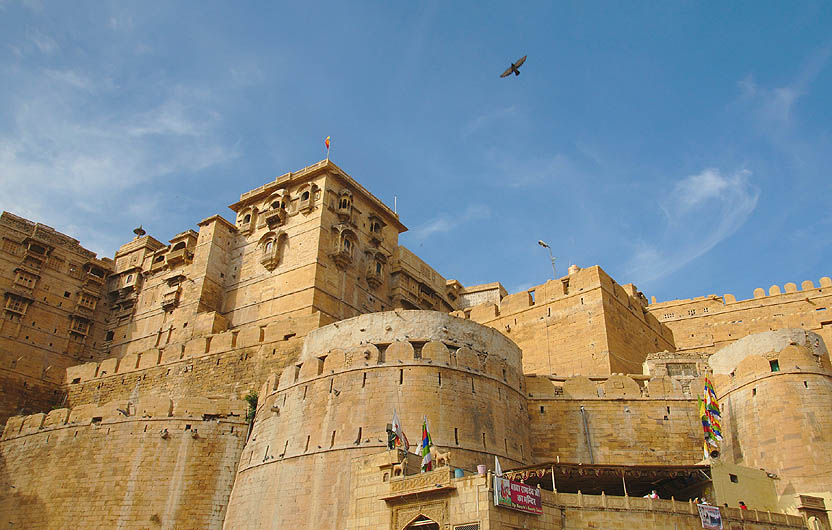
Rising out of the Thar Desert like a sandcastle carved from honey-coloured stone, Jaisalmer is unlike anywhere else in Rajasthan. Its fort is not a monument you visit and leave – it is a living town, with roughly 3,000 people still residing inside its ramparts in havelis that have been lived in continuously for centuries. Everything in Jaisalmer, from the fort walls to the finely carved merchant mansions in the town below, is built from the same local golden-yellow sandstone, which is why the entire city seems to glow amber at sunrise and sunset and has earned Jaisalmer its nickname, the Golden City.

Jaisalmer sits close to the India-Pakistan border in the far west of Rajasthan, and for centuries this position made it a critical stop on the camel caravan trade routes linking India with Central Asia, Persia and Egypt. That trade wealth built the elaborately carved havelis that still line Jaisalmer's old lanes, and it is also why the city feels distinct in flavour from Jaipur or Udaipur – the architecture, the desert cuisine and the folk music here carry a stronger Central Asian and nomadic desert influence than the Rajput courtly refinement found further east.

Beyond the fort and havelis, Jaisalmer is also most travellers' gateway to the Thar Desert itself. The Sam and Khuri sand dunes a short drive from the city are where the golden stone gives way to genuine rolling desert, and a camel safari with a night under the stars here is, for many visitors, the single most memorable experience of an entire Rajasthan trip.

Jaisalmer Fort, the Golden City of Rajasthan

History of Jaisalmer

Jaisalmer was founded in 1156 CE by Rawal Jaisal, a Bhati Rajput ruler, who moved his capital here from the nearby fort of Lodhruva after deciding its earlier location was too vulnerable to attack. He built his new fort atop the 80-metre Trikuta Hill, and the settlement that grew up around and inside it took his name: Jaisalmer, literally "the hill fort of Jaisal."

The Bhati Rajputs who ruled Jaisalmer were fiercely independent and, being somewhat isolated by the surrounding desert, managed to avoid the direct Mughal annexation that reshaped much of the rest of Rajasthan. Instead, Jaisalmer prospered through trade – caravans carrying silk, spices, opium and other goods between India and Central Asia had to pass through or near Jaisalmer, and the state levied taxes on this traffic that funded the elaborate haveli-building boom of the 18th and 19th centuries. Wealthy merchant families, particularly from the Jain community, competed with one another to build ever more ornately carved mansions, and it is their legacy – the Patwon ki Haveli, Nathmal ki Haveli and Salam Singh ki Haveli – that gives the old town its extraordinary stone lacework today.

Jaisalmer's fortunes declined sharply in the 19th century once sea trade routes via Bombay and other coastal ports made the overland caravan trade far less essential, and the city settled into a long, quiet period as a remote desert outpost. Its more recent history has been shaped by its location on the frontier: after independence and partition in 1947, and again during the wars of 1965 and 1971, Jaisalmer's proximity to the Pakistan border made it strategically important, and a significant Indian military presence remains in the area today. Ironically, this same remoteness that once caused decline is what has preserved Jaisalmer's old town so completely – it never underwent the large-scale modern redevelopment that changed the character of larger Rajasthani cities, leaving the fort and havelis remarkably intact for visitors to see now.

Carved sandstone haveli architecture in Jaisalmer

Intricate sandstone lattice carving typical of Jaisalmer's merchant havelis

Top Places to Visit in Jaisalmer

Jaisalmer Fort (Sonar Qila)

Also called the Golden Fort, Jaisalmer Fort is one of the very few "living forts" in the world, meaning it still functions as an inhabited town rather than existing purely as a preserved monument. A UNESCO World Heritage Site (inscribed in 2013 as part of the Hill Forts of Rajasthan), the fort's massive sandstone ramparts enclose narrow lanes, temples, havelis, guesthouses, shops and homes where families have lived for generations. Inside you'll find the ornate former royal palace, several beautifully carved Jain temples dating to the 12th-15th centuries, and countless small shops selling textiles, silver jewellery and leather goods. Because the fort is still residential, be mindful of water usage when staying inside it, as the fort's ancient drainage was never built for modern plumbing and over-tourism has caused structural strain in past years.

Patwon ki Haveli

The grandest of Jaisalmer's merchant mansions, Patwon ki Haveli is actually a cluster of five havelis built between 1800 and 1860 by a wealthy family of brocade and jewellery traders. The facade is covered in extraordinarily intricate stone latticework (jharokhas) and mirror work, and parts of the complex are open as a museum displaying period furniture, frescoes and artifacts from the family's trading days.

Nathmal ki Haveli and Salam Singh ki Haveli

Nathmal ki Haveli, built in the late 19th century as the residence of Jaisalmer's prime minister, is famous for having been carved by two brothers working on opposite wings simultaneously without coordinating precisely – resulting in two symmetrical but subtly different halves, complete with carved elephants flanking the entrance. A short walk away, Salam Singh ki Haveli is easily recognised by its distinctive curved, peacock-shaped roof and heavily ornamented upper storey, built by a former prime minister said to have been so powerful that the king eventually had part of the haveli's extra storeys torn down to curb his ambitions.

Gadisar Lake

Built in the 14th century as Jaisalmer's main water reservoir, Gadisar Lake remains a peaceful spot ringed with small temples, shrines and chhatris (cenotaphs), and crossed by an elaborately carved stone gateway, Tilon ki Pol. Paddle boats are available for hire, and the lake is a particularly good sunset spot, with migratory birds visible on the water in the cooler months.

Sam Sand Dunes and Khuri Dunes

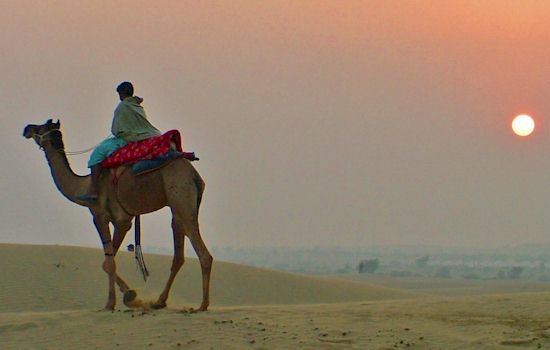
No trip to Jaisalmer is complete without heading out into the Thar Desert itself. The Sam Sand Dunes, roughly 40 km west of the city, are the most visited stretch, with camel and jeep safaris available along with cultural evenings featuring folk music and dance under the open sky. The Khuri Dunes, a little further south, are quieter and generally considered a better choice for travellers who want a more authentic desert-village experience with fewer crowds. Both offer overnight desert camping, and watching the sunset (and later, an extraordinarily starry sky) from atop a dune is a genuine highlight of visiting Rajasthan.

Bada Bagh

A short drive north of the city, Bada Bagh is a garden complex containing a striking row of royal cenotaphs (chhatris) built to commemorate Jaisalmer's former rulers, each with a carved memorial stone below recording the king's achievements. Set on a low ridge overlooking farmland, it is especially photogenic at sunset and far less crowded than the fort or havelis.

Kuldhara Abandoned Village

About 18 km from Jaisalmer, Kuldhara is the best known of a cluster of villages abandoned overnight, according to local legend, by their Paliwal Brahmin inhabitants in the early 19th century rather than submit to a tyrannical minister's demands. Whatever the true explanation for the sudden desertion, the ruined houses, temple and streets, now maintained as a heritage site, make for an atmospheric stop, particularly popular around dusk.

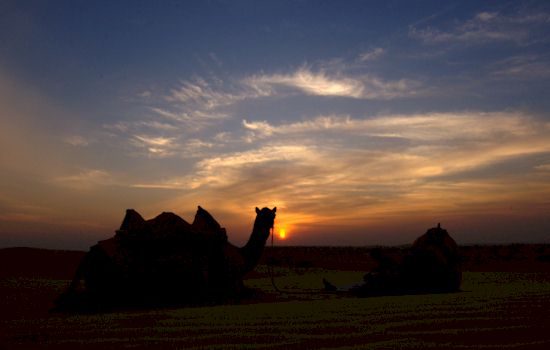
Sand dunes near Jaisalmer at sunset

The golden dunes of the Thar Desert near Jaisalmer at sunset

Best Time to Visit Jaisalmer

The ideal window is October to March, when daytime temperatures are comfortable for exploring the fort on foot and desert nights are cool rather than freezing. December and January are the coolest months and also the most popular, especially around the Desert Festival (usually held in February, in the Hindu month of Magh), when Jaisalmer hosts camel races, turban-tying competitions and folk performances against the backdrop of the fort. Because Jaisalmer sits in genuine desert, summers (April to June) are severe, frequently exceeding 45°C, and are best avoided unless you have a specific reason to visit. The monsoon (July to September) brings only light, sporadic rain to this arid region, but humidity and heat can still make daytime sightseeing uncomfortable.

How to Reach Jaisalmer

By Air: Jaisalmer Airport has direct flights to and from Delhi and a few other cities, though frequency is more limited than at Jaipur or Udaipur, so it's worth checking current schedules when planning. Many travellers instead fly into Jodhpur (roughly 5-6 hours away by road) and continue overland.

By Rail: Jaisalmer Railway Station has direct trains from Jodhpur, Jaipur and Delhi, including an overnight service from Delhi that is a popular way to arrive without losing a full travel day.

By Road: Jaisalmer is connected by well-maintained highways: about 5-6 hours from Jodhpur, 5-6 hours from Bikaner, and roughly 5-6 hours from Jaipur. Because of the distances involved and the long stretches of open desert highway, hiring a car with an experienced driver is generally the most comfortable way to combine Jaisalmer with the rest of a Rajasthan itinerary.

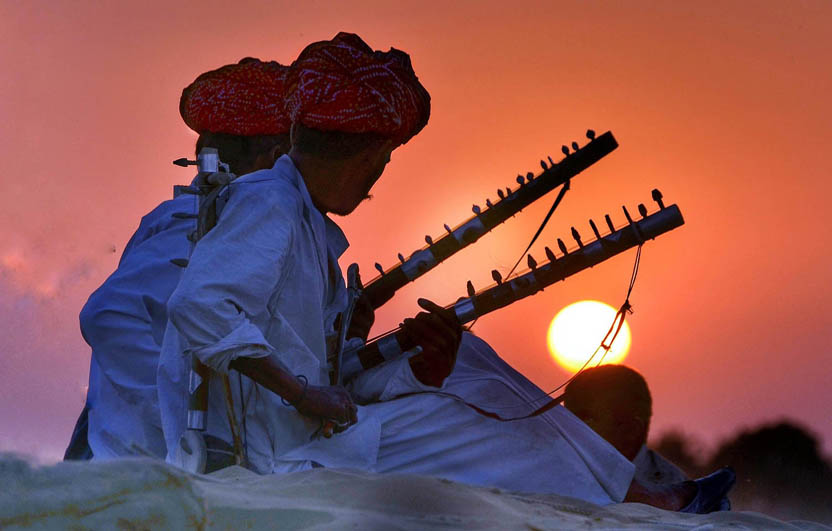
Rajasthani folk musicians

Manganiar folk musicians performing at a desert camp

Culture, Food and Festivals

Jaisalmer's desert setting has produced a cuisine and culture distinct from the rest of Rajasthan. Because fresh vegetables were historically scarce this far into the Thar, local cooking leans heavily on dried lentils, beans and millet: ker sangri (a tangy dish made from wild desert beans and berries), bajre ki roti (millet flatbread) and gatte ki sabzi are all Jaisalmer specialities well worth seeking out. The city's folk music tradition is equally distinctive, shaped by the Manganiar and Langa communities of hereditary desert musicians, whose haunting songs accompanied by instruments like the kamaicha and khartal are often performed at evening desert camps and haveli courtyards.

The biggest annual event is the Jaisalmer Desert Festival, usually held over three days in February, which brings camel races, tug-of-war contests, turban-tying and moustache competitions, and folk dance performances to the dunes outside the city, drawing visitors from across the world. Gangaur and Diwali are celebrated with the same enthusiasm as elsewhere in Rajasthan, and given the city's substantial Jain heritage, festivals like Mahavir Jayanti are also observed with processions and temple rituals at the fort's Jain temples.

Travel Tips for Jaisalmer

Sun and dust protection matter more here than almost anywhere else in Rajasthan: carry sunscreen, sunglasses and a scarf or hat, and drink more water than feels necessary, particularly if you're out at the dunes midday. If you're booking a desert camping package, ask specifically whether it includes the Sam or Khuri dunes, how many other groups will be at the same camp, and whether the campfire and folk music evening is included, since packages vary widely in quality. Evenings in the desert, even outside winter, cool down quickly, so pack a warm layer for camel safaris and overnight camping even if the daytime was hot.

Because the fort is still a living, inhabited settlement with genuine water and sewage constraints, consider staying in one of the many well-run heritage havelis in the town just below the fort rather than inside it, and if you do choose to stay inside, be conscious of water use. Bargaining is expected in the fort's shops and in the haveli-lined lanes below, and it's worth comparing a few shops before committing to a textile or silver purchase.

Where to Stay

Jaisalmer offers everything from budget guesthouses inside the fort to heritage havelis and desert-facing resorts in the town below. Staying in the town, a short walk from the fort, generally offers a better balance of atmosphere and comfort, along with rooftop restaurants offering fort views at sunset. Travellers planning a desert safari should also budget one night at a Sam or Khuri dunes camp as part of their stay, rather than treating it purely as a day trip.

Suggested Jaisalmer Itinerary and Excursions

Two full days are enough to see Jaisalmer's core sights at a relaxed pace, with a third day recommended if you want to properly enjoy an overnight desert camp rather than rushing it.

Day 1: Spend the morning exploring Jaisalmer Fort itself – the palace museum, the Jain temples, and simply wandering its lanes and shops. In the afternoon, walk down to the havelis in the town below: Patwon ki Haveli, Nathmal ki Haveli and Salam Singh ki Haveli are all within easy walking distance of one another. End the day at Gadisar Lake for sunset.

Day 2: Take a half-day trip to Kuldhara abandoned village and Bada Bagh's royal cenotaphs, both easily combined in a morning outing. In the afternoon, head out to the Sam or Khuri sand dunes for a camel or jeep safari, staying overnight at a desert camp to catch both sunset and sunrise over the dunes along with an evening of folk music.

Day 3 (optional): Return to the city at a leisurely pace, with time for any havelis or fort corners missed on day one, or simply revisit the fort in the softer late-afternoon light for photography before departing.

Jaisalmer pairs naturally with a broader Rajasthan circuit taking in Jodhpur and Jaipur; see our car rental services for a comfortable way to cover the long desert highways between cities, or browse our Rajasthan tour packages for multi-city itineraries that include Jaisalmer.

Frequently Asked Questions About Jaisalmer

How many days do you need in Jaisalmer?

Two full days are enough to cover the fort, the main havelis and Gadisar Lake at a relaxed pace. Add a third day if you want an unhurried overnight desert camping experience at the Sam or Khuri dunes rather than a rushed same-day visit.

Is Jaisalmer Fort still inhabited?

Yes. Jaisalmer Fort is one of the few surviving “living forts” in the world, with roughly 3,000 residents still living inside its walls in homes, guesthouses and shops that have been continuously occupied for centuries.

What is the best time of year to visit Jaisalmer?

October to March is best, with comfortable daytime temperatures and cool desert nights. December and January are the most popular months, coinciding with the Jaisalmer Desert Festival usually held in February. Summers from April to June are extremely hot, often above 45°C, and are best avoided.

How do I get to Jaisalmer from Jaipur?

Jaisalmer is roughly 5-6 hours from Jaipur by road via well-maintained highways, or reachable by direct train. Hiring a car with a driver is a popular option since it allows stops along the way and flexibility for the long desert stretch.

Which is better: Sam Dunes or Khuri Dunes?

Sam Dunes are the most visited and offer the widest choice of camel safaris and cultural evening programs, while Khuri Dunes, a little further from the city, tend to be quieter and offer a more authentic desert-village feel with fewer crowds. Both make for a memorable overnight desert camp.

Is one night of desert camping enough?

One night is enough to experience sunset, a folk music evening, stargazing and sunrise over the dunes, which covers the essential experience. Travellers who especially love the desert sometimes extend to two nights, but it isn't necessary for a satisfying visit.

What should I pack for a Jaisalmer desert safari?

Sunscreen, sunglasses, a scarf or hat for sun and dust protection, and a warm layer for the evening, since desert temperatures drop quickly after sunset even outside winter. Comfortable closed shoes are useful for walking on sand and for exploring the fort's uneven stone lanes.

Are the havelis in Jaisalmer worth visiting?

Yes, particularly Patwon ki Haveli, Nathmal ki Haveli and Salam Singh ki Haveli, which showcase some of the finest sandstone carving in Rajasthan and offer insight into the wealthy merchant families who built Jaisalmer's old town during its caravan-trade heyday.

Is Jaisalmer safe and comfortable for tourists given its border location?

Yes, Jaisalmer is a well-established, popular tourist destination and welcomes large numbers of domestic and international visitors year-round. Its proximity to the border has historical significance but does not affect the everyday tourist experience in the city or at the dunes.

Rajasthan Travel Tips

Best Cheap & Bargain Locations

Guide on Jaipur & Rajasthan's best locations for bargain and cheap shopping, by-passing all the common places.

The Best Places & the best Avoidable Places

We will tell you only the best places to visit in Jaipur & Rajasthan and not waste time on less important locations.

What to Do & What Not to Do in Rajasthan

Best guide on what To and what Not to do in Rajasthan. This will help your trip to be fruitful and less stressing

Most Trusted & Highly Appreciated by clients

Tripadvisor - Certificate of Excellence 2016~2018

We are proud of receive such wonderful guests who have posted their experiences on Tripadvisor of their trip with our company. We are glad we could serve you and pull upto your exptations.

Arrangement & Helps

WE ARE RAJASTHAN LOCAL TOUR OPERATOR WITH FULL KNOWLEDGE OF OUR STATE


₹ 22,854/- 

Jaipur, Agra, Delhi
5 Days / 4 Nights

Best Deal

₹ 17,082/- 

Ranthambhore Tiger Tour
3 Days / 2 Nights

New & Popular

Copyright | Best of Rajasthan Tours by JaipurTraveling | Web Solutions - Techno Edge


Contact
Phone
Whatsapp