Jaipur Travel - Guide

Book travel packages for Rajasthan with a dedicated travel manager & enjoy your holidays

Jaipur - Travel Guide

Tourism guide for Jaipur

Jaipur, the capital of Rajasthan, is famous the world over as the "Pink City" – a title it earned in 1876 when the entire old city was painted a warm terracotta pink to welcome the Prince of Wales, later King Edward VII. That colour has been a point of civic pride ever since, and it still washes over the havelis, bazaars and forts of the walled city today. Jaipur is the first stop on the classic Golden Triangle circuit (Delhi – Agra – Jaipur), and it more than earns its place: a UNESCO World Heritage city where Mughal and Rajput architecture sit side by side, framed by the rugged Aravalli hills.

What makes Jaipur special isn't just any single monument, it's how much history is packed into a walkable old city. In a couple of days you can move from a Maharaja's palace to a working astronomical observatory, from a fort perched on a ridge to a bazaar that has sold the same block-printed cotton and polished gemstones for generations. It is a city built for exploring on foot, by cycle-rickshaw, or with a private car and driver, and it works equally well as a relaxed weekend break or as the anchor of a longer Rajasthan tour.

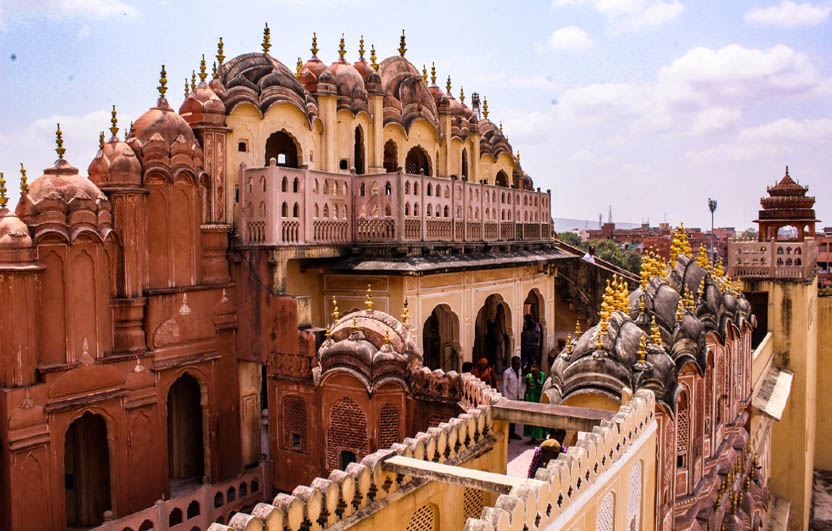
Hawa Mahal, the Palace of Winds, Jaipur

A Little History

Jaipur was founded in 1727 by Maharaja Sawai Jai Singh II of the Kachwaha Rajput dynasty, who moved his capital from the hill fort of Amber to the plains below because the old capital was running short of water and space. Jai Singh II was not just a ruler but a keen astronomer and mathematician, and it shows: Jaipur is one of the earliest planned cities in India, laid out on a grid according to principles from the ancient Indian treatise Shilpa Shastra, with wide avenues, nine rectangular city blocks, and a fortified wall pierced by grand gates.

The city stayed the seat of the Kachwaha Rajputs through the era of the British Raj, and it was the state's alliance-building rather than conquest that shaped much of its later architecture – palaces and gateways were as much about diplomacy and prestige as defence. The Kachwahas were early allies of the Mughal empire, a relationship that brought Jaipur relative peace and prosperity while other Rajput kingdoms fought prolonged wars, and that alliance is visible today in the way Mughal garden design and Rajput fort-building blend across the city's monuments.

In 1876, the entire old city was repainted pink (a colour traditionally associated with hospitality in Rajasthani custom) for a state visit by the Prince of Wales, and a later royal decree kept the tradition alive, which is why the old city still glows the same colour today, with building regulations in the walled city still requiring the same terracotta-pink limewash. In 1949, Jaipur merged with Jodhpur, Bikaner and Jaisalmer to form the state of Rajasthan, and it was made the state capital – a role it still holds, and in 2019 the walled city of Jaipur was inscribed as a UNESCO World Heritage Site in recognition of its urban planning and living architectural heritage.

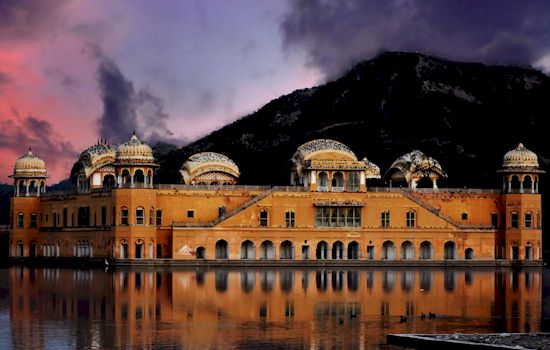
Jal Mahal, the Water Palace in Man Sagar Lake, Jaipur

Jal Mahal, the Water Palace on Man Sagar Lake

Top Places to See in Jaipur

Jaipur rewards a slower pace, but if your time is limited, these are the sights worth building an itinerary around.

Hawa Mahal (Palace of Winds): Jaipur's most photographed building is a five-storey, honeycombed sandstone facade of 953 small windows (jharokhas), built in 1799 so the royal women could watch street life and festivals below without being seen themselves. The front is best seen from across the street, ideally in the morning light; the small museum and narrow inner stairways are worth the short visit as well.

Amber Fort (Amer Fort): Perched on a hill above Maota Lake around 11 km from the city centre, Amber Fort was the original seat of the Kachwaha rulers before Jaipur was founded. Its Sheesh Mahal (Mirror Palace), where thousands of tiny mirrored tiles once turned a single candle into a starlit ceiling, is the highlight, along with the Diwan-i-Aam and the fort's sweeping ramparts, which echo the Great Wall of China from a distance.

City Palace: Still partly home to Jaipur's former royal family, the City Palace complex mixes Rajput and Mughal architecture around a series of courtyards, and houses a museum of royal costumes, weapons and miniature paintings. The Chandra Mahal and Mubarak Mahal are architectural highlights, and the palace remains the ceremonial heart of the old city.

Jantar Mantar: Right next to the City Palace, this UNESCO-listed astronomical observatory was also built by Jai Singh II in the 1720s. Its nineteen stone and marble instruments, including the world's largest stone sundial, can still tell the time and track celestial positions with remarkable accuracy, and it remains one of the best-preserved of the five Jantar Mantars Jai Singh built across India.

Nahargarh Fort: Built along the Aravalli hills as a defensive extension of Amber Fort, Nahargarh is best known today for its sunset views over the pink city below. It connects by a hill road to Jaigarh Fort, and the two are often visited together.

Jaigarh Fort: Home to the Jaivana cannon, once the largest wheeled cannon in the world, Jaigarh was built primarily to protect Amber Fort and served as the royal treasury and cannon foundry. The fort's ramparts offer some of the best panoramic views in Jaipur.

Jal Mahal (Water Palace): A five-storey palace that appears to float in the middle of Man Sagar Lake, with four of its floors submerged when the lake is full. It's not open for interior visits, but the lakeside viewpoint, especially at sunrise or sunset with the Aravalli hills behind it, is one of Jaipur's most striking sights.

Albert Hall Museum: Set in the Ram Niwas Garden, this Indo-Saracenic building is Rajasthan's oldest museum, with collections spanning miniature paintings, metalwork, carpets, and an Egyptian mummy. The building itself, illuminated at night, is as much a draw as the exhibits.

Birla Mandir (Laxmi Narayan Temple): A modern white marble temple dedicated to Vishnu and Lakshmi, built on a raised platform at the base of Moti Dungri hill. Its stained-glass windows and carved marble panels, depicting figures from different faiths and philosophies, make it worth a visit even outside of festival times.

Patrika Gate: One of Jaipur's newer landmarks, this brightly painted, elaborately decorated gateway at the entrance to Jawahar Circle Garden has become a popular spot for photographs, with each of its nine arches painted in a different, intricate pattern celebrating Rajasthani art.

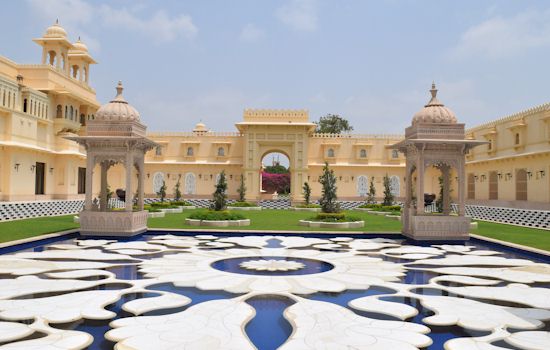
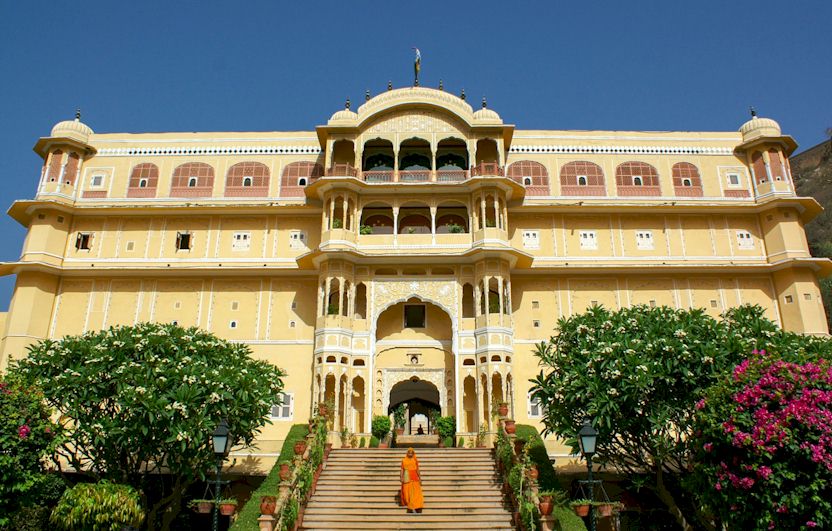
Samode Palace near Jaipur

Samode Palace, a popular day trip from Jaipur

Best Time to Visit Jaipur

October to March is the classic window, when daytime temperatures sit comfortably between 10–28°C and the city's forts and outdoor sights are easy to explore on foot. December and January can turn genuinely cold in the early mornings and evenings, so pack a warm layer if you're travelling then. Summers (April to June) are extremely hot, with temperatures regularly crossing 40°C, and are best avoided unless you don't mind sticking to early mornings and air-conditioned interiors. The monsoon (July to September) cools things down and turns the surrounding Aravallis green, and while showers can disrupt sightseeing, it's also the quietest and often the most affordable time to visit.

How to Reach Jaipur

By Air: Jaipur International Airport (Sanganer) is well connected to Delhi, Mumbai, and other major Indian cities, with a handful of direct international connections as well. It's about 13 km from the city centre.

By Rail: Jaipur Junction is a major railway hub on the Delhi–Ahmedabad/Mumbai line, with frequent trains from Delhi (roughly 4–5 hours), Agra, and Mumbai, making the train a comfortable and scenic option.

By Road: Jaipur sits on NH48, about 280 km (a 5–6 hour drive) from Delhi, and is the natural first or last stop on a Golden Triangle road trip with Agra. A private car with driver is the easiest way to combine Jaipur with day trips to Amber, Samode, or Abhaneri without depending on public transport schedules.

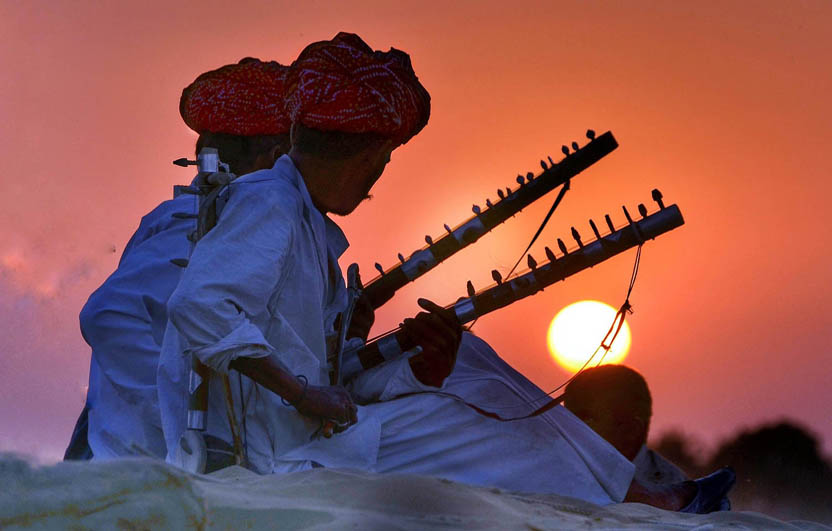
Rajasthani folk musicians

Rajasthani folk musicians, part of the region's living culture

Local Culture, Food & Shopping

Jaipur's bazaars are organised by craft, a tradition that goes back to the city's original planning. Johari Bazaar is the place for jewellery and gemstones, Bapu Bazaar and Nehru Bazaar are known for textiles, block-printed fabric, and juttis (traditional leather shoes), and Chandpole Bazaar is worth a visit for marble and stone handicrafts. Bargaining is expected almost everywhere except fixed-price government emporiums.

On the food side, don't leave without trying a Rajasthani thali – a full spread of dal, vegetables, rotis and rice served together – along with dal baati churma (baked wheat rolls with lentils and a sweet crumble), the deep-fried, syrup-soaked ghevar sweet (especially around the Teej and Gangaur festivals), and pyaaz kachori for breakfast. Lassi from the old city's small stalls is also a Jaipur institution.

If your visit lines up with a festival, Jaipur is especially rewarding. Teej, celebrating the arrival of the monsoon, brings processions of decorated elephants and folk dancers through the old city in July or August, while Gangaur, held in March or April, honours Goddess Parvati with women in traditional dress carrying idols through the streets. The Jaipur Literature Festival, usually held in January, has grown into one of the world's largest free literary festivals and draws authors and visitors from across the globe. Diwali, the festival of lights, is also especially beautiful here, with the bazaars and havelis strung with lamps.

Travel Tips for Jaipur

Most forts and palaces involve walking on uneven stone steps and ramps, so comfortable footwear matters more than fashion. Many monuments, including Amber Fort and the City Palace, are best visited early in the day, both to beat the heat and the tour-bus crowds. Dress modestly when visiting temples, and carry a scarf or shawl that can double as a head-covering where needed. Hiring a licensed local guide at the major forts is worth it – the storytelling adds far more than the small extra cost. If you're travelling between sights across the day, a car with driver is generally more practical than relying on autos, especially for trips out to Amber Fort or Nahargarh.

Where to Stay: The old walled city puts you within walking distance of Hawa Mahal, City Palace and the main bazaars, and is a good choice if you want to soak up the pink-city atmosphere directly. The areas around C-Scheme and Bani Park offer a wider range of mid-range and boutique hotels with easier road access, while Amer Road, close to Amber Fort, suits travellers who want a quieter, more scenic base slightly outside the city centre. Heritage havelis converted into hotels are common across all these areas and are worth considering for a more atmospheric stay.

Nearby Excursions & Suggested Itinerary

Two to three days is enough to see Jaipur's core sights at a comfortable pace. A typical plan looks like this:

Day 1: Start early at City Palace before the crowds build up, walk over to Jantar Mantar next door, then cross the road to photograph Hawa Mahal from the tea-stall balconies opposite. Spend the afternoon in the old city bazaars – Johari Bazaar for jewellery, Bapu Bazaar for textiles – before an early dinner of Rajasthani thali.

Day 2: Devote the morning to Amber Fort, ideally arriving right at opening time to beat both the heat and the tour groups, then continue up the hill road to Jaigarh Fort for the cannon and the views. In the late afternoon, head to Nahargarh Fort for sunset over the pink city.

Day 3: Spend the morning at Albert Hall Museum and the surrounding Ram Niwas Garden, then drive out to Jal Mahal for photographs on the lakeside. If you still have energy, the Birla Mandir and Patrika Gate make an easy final stop before heading to the airport or onward to your next destination.

If you have extra time, Jaipur also makes a good base for day trips to the frescoed havelis of Shekhawati, the step-well at Abhaneri (Chand Baori), or the small heritage town of Samode with its beautifully restored palace, all of which can be done as a single day out from the city.

Jaipur also connects naturally into longer circuits – it's the usual starting point for our 3-day Rajasthan tours and 5-day Rajasthan tour packages, and pairs well with Pushkar, Udaipur, or Jaisalmer if you're planning a longer trip. For getting around the city and to nearby sights, our Jaipur car rental service covers everything from airport transfers to full-day sightseeing with a driver.

Frequently Asked Questions About Jaipur

Why is Jaipur called the Pink City?

In 1876, the old city was painted pink to welcome the Prince of Wales (later King Edward VII), pink being a traditional colour of hospitality in Rajasthani custom. A later civic decree preserved the tradition, and the old city's buildings are still maintained in the same pink-terracotta shade today.

How many days are enough to visit Jaipur?

Two to three days is enough to comfortably cover Jaipur's main sights, including Amber Fort, City Palace, Hawa Mahal, and Jantar Mantar, with time left over for the bazaars. If you want to add day trips to Samode or Abhaneri, plan for three to four days.

What is the best time of year to visit Jaipur?

October to March offers the most comfortable weather, with cool mornings and pleasant daytime temperatures ideal for sightseeing. Summers (April to June) are very hot, and the July–September monsoon brings cooler but occasionally wet weather.

Is Amber Fort the same as Jaipur City?

No. Amber Fort is a separate hilltop fort about 11 km from central Jaipur, and was the capital of the Kachwaha rulers before Jaipur city was founded in 1727. It's usually visited as a half-day trip from Jaipur city.

How do I get from Delhi to Jaipur?

The most common options are a 4–5 hour train journey from Delhi, a private car or taxi along NH48 (around 5–6 hours), or a short domestic flight. Jaipur is also the standard first stop on Golden Triangle tours that continue on to Agra.

Is Jaipur good for shopping?

Yes – Jaipur is well known for gemstones and jewellery (Johari Bazaar), block-printed textiles and juttis (Bapu Bazaar, Nehru Bazaar), and blue pottery and marble handicrafts (Chandpole Bazaar). Bargaining is normal in most local markets.

Do I need a guide to visit Jaipur's forts?

It's not required, but a licensed local guide adds a lot of historical context at sites like Amber Fort and City Palace that isn't always covered by signage. Guides can usually be arranged at the entrance or booked in advance through your tour operator.

Is Jaipur safe for tourists, including solo travellers?

Jaipur is generally considered one of the more tourist-friendly cities in Rajasthan, with a well-established tourism infrastructure. As with any popular destination, it's sensible to book accommodation in advance, use registered taxis or your hotel's recommended transport after dark, and stay alert for overpricing near major monuments.

Can Jaipur be combined with Agra and Delhi in one trip?

Yes – Jaipur, Agra and Delhi together make up India's classic Golden Triangle circuit. Jaipur to Agra is around 240 km (roughly 5 hours by road), and Agra to Delhi is a further 3–4 hours, so the full triangle is comfortably doable in 5–7 days.

Rajasthan Travel Tips

Best Cheap & Bargain Locations

Guide on Jaipur & Rajasthan's best locations for bargain and cheap shopping, by-passing all the common places.

The Best Places & the best Avoidable Places

We will tell you only the best places to visit in Jaipur & Rajasthan and not waste time on less important locations.

What to Do & What Not to Do in Rajasthan

Best guide on what To and what Not to do in Rajasthan. This will help your trip to be fruitful and less stressing

Most Trusted & Highly Appreciated by clients

Tripadvisor - Certificate of Excellence 2016~2018

We are proud of receive such wonderful guests who have posted their experiences on Tripadvisor of their trip with our company. We are glad we could serve you and pull upto your exptations.

Arrangement & Helps

WE ARE RAJASTHAN LOCAL TOUR OPERATOR WITH FULL KNOWLEDGE OF OUR STATE


₹ 22,854/- 

Jaipur, Agra, Delhi
5 Days / 4 Nights

Best Deal

₹ 17,082/- 

Ranthambhore Tiger Tour
3 Days / 2 Nights

New & Popular

Copyright | Best of Rajasthan Tours by JaipurTraveling | Web Solutions - Techno Edge


Contact
Phone
Whatsapp